

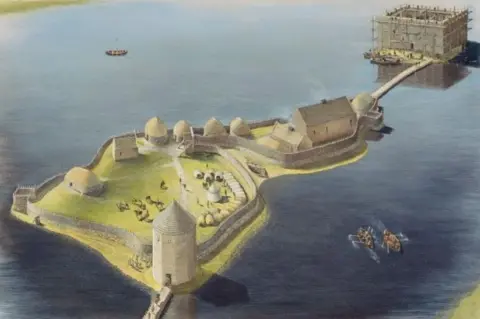
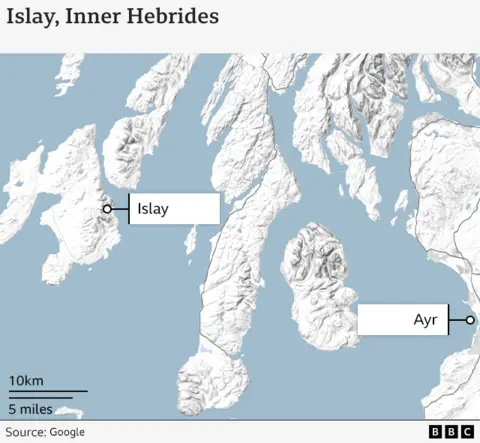
A long-forgotten fortress unearched on a Hebridean isle could have housed rulers who controlled vast regions of western Scotland.
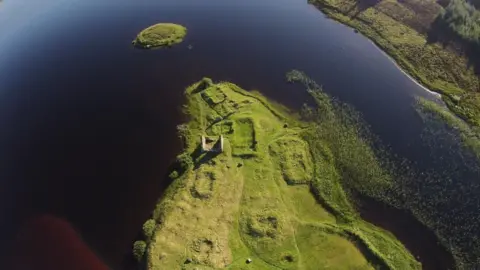
Historians believe the structure, built spanning two land masses within a body of water at this historic site, was used by royalty some 700 years previously.
Their descendants comprised MacDonald clan chiefs who were later called the Lords of the Isles.
They transformed the site into a power base from which they governed the Hebrides, Argyll and sections of the northern Highlands.
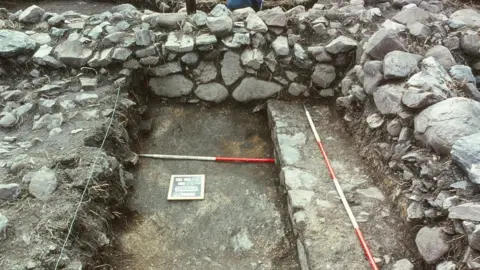
Experts have dedicated almost 30 years researching this location to acquire a deeper knowledge of its significance in the domain of the Lords of the Isles, as well as the area’s prior uses.
Remains of a stronghold were uncovered and traced back to the 1100s and 1200s, prior to the lords became dominant.
The fort included a rectangular keep like those found in impressive fortresses in northern England, coastal forts and Lancaster.
The structure housed living quarters, courtyards, cooking areas, a great hall where celebrations occurred and a place of worship with an accompanying burial ground.
Experts mentioned that Norman-inspired kings in Britain and Ireland were recognized for building stone structures, and they suggested that Finlaggan's was built as a demonstration of power and resources.
The structure could have been demolished because it was weakened or harmed during conflicts.
A palace was later built on the exact site for the clan chief.
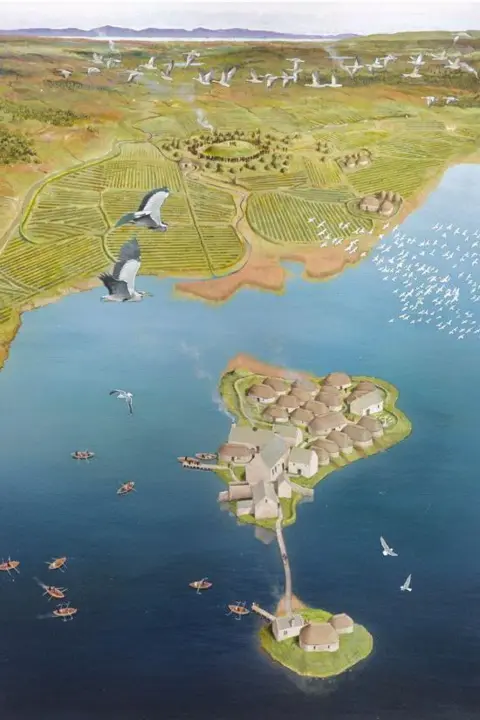
The Lords of the Isles considered themselves monarchs and saw themselves as counterparts of other nobility.
They conducted attacks in northern Britain and targeted sites such as a historic stronghold on the edge of a Scottish loch.
According to a new book, experts declared that the site was the chieftains' primary base of operations.
The book has been published by a archaeological organization.
An author guided a group of professionals and volunteers in revealing additional details about the site.
"The analysis of all the information that was collected has been a central part of my career since the late 20th century, and I hope I have not only delivered an narrative of interest but also a foundation for others to carry out more exploration in the future."
Another expert remarked that the organization's purpose was to share understanding of the past as widely as feasible.

